Aller au contenu principal
sicily-etna-volcanic-wines
wine-art

Sicily Etna Volcanic Wines — The Burgundy of the South, Without the Crowd

Mount Etna is producing some of the most distinctive wines in the world right now — Frank Cornelissen, Passopisciaro, Tenuta delle Terre Nere. This is the FFGR Italia 4-day itinerary for UHNW principals who want Burgundy-grade complexity without the Burgundy crowd.

Etna is the largest active volcano in Europe and, since roughly 2010, one of the most exciting wine regions on the planet. The northern slopes (Castiglione di Sicilia, Linguaglossa, Solicchiata) produce reds from Nerello Mascalese grapes that taste like a hybrid of Burgundy Pinot Noir and Northern Rhône Syrah — minerally, smoky, structured, age-worthy. For UHNW collectors who already own all the relevant Burgundies and Barolos, Etna is the most interesting new region of the 2020s. This article is the FFGR Italia 4-day private itinerary, the estates that matter, and the logistics for principals based in Northern Europe or the United States.

Why Etna matters now — and why it didn't before 2010

For most of the 20th century, Sicily was a bulk wine region. Etna was a forgotten corner producing rough table reds. The turning point was 2001, when Andrea Franchetti (a Tuscan aristocrat who had been making wine in Tuscany at Tenuta di Trinoro) bought 13 hectares on the northern slopes of Etna at 800-1000m altitude. He named it Passopisciaro and produced wines that nobody knew how to categorise.

In 2002, Marc de Grazia (the importer who made Italian wine famous in the United States) bought Tenuta delle Terre Nere. In 2010, Frank Cornelissen — a Belgian who had been producing natural wines since 2001 in a tiny garage in Solicchiata — released his Magma flagship that suddenly cost 600-1200 € per bottle in Tokyo and Hong Kong.

The geology explains the wine. Etna soils are pure volcanic ash, broken-down basalt, and lava sand — almost no clay. This forces the vines to root 4-5 meters deep to find water, producing wines with extreme mineral expression. The altitude (600-1100m, the highest vineyards in continental Europe) preserves acidity. The northern exposure on the slopes gives slow ripening even in August. The grape — Nerello Mascalese — is naturally pale, structured, and aromatic, the closest Italian equivalent to Pinot Noir.

For UHNW collectors used to Romanée-Conti, Sassicaia and Conterno Monfortino, Etna offers a new family of flavours at a fraction of the price. Top Etna bottles trade for 80-300 € at the domain. The same wines at restaurant in Paris or NYC reach 400-900 €. By 2030, we expect another 5x revaluation.

The five estates to visit — and the order to visit them in

**1. Tenuta delle Terre Nere (Marc de Grazia) — the diplomatic introduction.** Largest of the premium Etna producers (37 hectares), most welcoming for first-time UHNW visits. Marc de Grazia speaks English, French and Italian fluent — he is one of the most articulate communicators on Etna terroir. Tour 90 minutes including the 1947 pre-phylloxera vines (some of the only ones still alive in Europe). Tasting 5-7 cuvées including Calderara Sottana and Feudo di Mezzo. Lunch at the domain if requested (cooked by the chef of nearby Shalai Resort, 35 minutes by car). Best in May-June or September-October.

**2. Passopisciaro (Andrea Franchetti) — the intellectual visit.** Andrea Franchetti is the most cerebral of the Etna producers. His estate at 850m sources from 5 contradas (single-vineyard sites) — Porcaria, Chiappemacine, Sciaranuova, Rampante, Guardiola. The visit is a geology lecture; you taste the same Nerello Mascalese from 5 different lava flows and understand viscerally what "terroir" means. Tour 2h. Tasting 6 cuvées. The Franchetti white (a Petit Verdot and Cesanese di Olevano blend, unique in Italy) is included. Bring focus and a notebook.

**3. Frank Cornelissen — the radical natural wine visit.** Frank produces less than 10 000 bottles per year. His top cuvée, Magma, comes from a half-hectare parcel of pre-phylloxera vines planted in 1860 — fermented in clay amphorae buried in the ground, no sulphur, no filtering. The wine is divisive — some collectors find it transcendental, others find it broken. The visit is 90 minutes, in his garage workshop in Solicchiata. Frank does not speak much; the wine does. We recommend doing this visit AFTER Terre Nere and Passopisciaro so you understand what you're tasting.

**4. Pietradolce (Faro family) — the architectural revelation.** The newest of the premium estates (founded 2005 but with vineyards since the 1930s). The cellar, designed by Mario Cucinella, is one of the most beautiful in Italy — a curved underground space carved into the lava rock. The wines (especially the white from Carricante grapes, fermented in barrel) are some of the most refined on the mountain. Lunch on the terrace overlooking the vines + the Mediterranean visible 30km in the distance.

**5. I Vigneri (Salvo Foti) — the traditionalist counterpoint.** Salvo Foti is the keeper of the Etna tradition — he revived the wooden frame-trained vine system used here for 200 years. His wines are made cooperatively with 8 other small producers under his consultation. Visit 90 minutes, tasting 4 cuvées, in a 17th-century palmento (lava-stone winery). The contrast with Cornelissen's natural wine philosophy is instructive — Foti believes natural wine without sulphur is reckless; Cornelissen believes sulphur masks terroir. Hearing both within 24 hours is the most educational Etna experience.

The 4-day FFGR Italia itinerary

**Day 1 — Arrival.** Private jet to Catania Fontanarossa (CTA) or Comiso (CIY). FBO Sky Services apron pickup by Mercedes V-Class FFGR Italia. Transfer 90 minutes to your hotel base — we recommend either **Monaci delle Terre Nere** (an old monastery on Etna northern slopes, 18 rooms, restaurant Locanda Nerello on-site, 2 200-3 800 €/night) or **Shalai Resort** in Linguaglossa (more contemporary, 13 rooms, restaurant Shalai 1 Michelin star, 1 600-2 800 €/night). Dinner at hotel restaurant. Acclimatize to the altitude (800-1000m makes a difference if you arrived from sea level).

**Day 2 — Tenuta delle Terre Nere + Pietradolce.** 9:00 AM departure, 30 min to Terre Nere. Marc de Grazia tour + tasting until 12:30 PM. Lunch at the domain or at La Sicilia in Castiglione. 3:00 PM Pietradolce for the architecture and the Carricante white. Back to hotel 7 PM. Dinner at Locanda Nerello (your hotel) or, for a special evening, drive 35 min south to **Don Camillo** in Catania (1 Michelin, the city's best seafood, paired with white Carricante from Etna).

**Day 3 — Passopisciaro + Cornelissen.** A more demanding day intellectually. 9:30 AM Passopisciaro, the 2h Franchetti lecture-tasting on the 5 contradas. Lunch at the domain or in nearby Castiglione di Sicilia (try **Cave Ox** for trattoria style). 3:30 PM Cornelissen at his garage in Solicchiata. The Cornelissen visit is short but intense — the wine is the conversation. Back to hotel 6:30 PM. Light dinner at hotel.

**Day 4 — Salvo Foti + Etna summit.** 9:00 AM Salvo Foti at I Vigneri, the traditionalist counterpoint. Lunch at the palmento. 2:30 PM helicopter ascent of Etna summit (we coordinate via Sky Aviation Sicilia, EC135 30 min round-trip, you walk briefly on the crater rim with a volcanologist guide if the activity allows). The contrast — drinking wine from this volcano then standing on it — is the moment that makes UHNW principals call us a week later asking to buy a house here. 6 PM return Catania airport for departure jet, or extension to Taormina (45 min) for a second 3-day mandate.

What it costs — full transparency

A 4-day Etna mandate for 2 principals, all-in:

— Ground transport FFGR Italia V-Class 4 days dedicated: 6 200-9 500 €. — Hotel Monaci delle Terre Nere 3 nights suite: 6 600-11 400 €. — Domain visits + tastings × 5 (Terre Nere, Pietradolce, Passopisciaro, Cornelissen, I Vigneri): 4 500-7 200 € for 2 (including service fees, lunches at domains, tasting flights). — Wine purchases at domain — variable. Reasonable allocation: 8 000-25 000 € (1-2 bottles each cuvée per estate, plus 1 case of your favourite). For serious collectors hunting Cornelissen Magma 2019 (180-220 €/bottle at domain, 800-1 200 € retail): 15 000-30 000 € additional. — Helicopter Etna summit 30 min: 3 800-5 200 €. — Catania Don Camillo dinner: 380-550 €.

**Total all-in for 2 principals over 4 days, mid-range: 30 000-48 000 € excluding wine purchases.** Wine purchases at domain typically add 10 000-30 000 € depending on the collector's appetite. For a couple plus 2 friends (4 pax, 5 days with Taormina extension): 75 000-105 000 €.

Note: most Etna domains do not allow more than 4 visitors at a time for the premium tastings (Cornelissen caps at 4 — non-negotiable). If your party is 6, we split into two groups offset by 30 minutes.

When to go — and when not to

**Best months:** May-June and September-October. April is still cold at altitude (some days < 10°C). July and August are too hot in Catania (38-42°C) for tasting comfort, and the vines are dormant in their summer stress phase. November-March is too cold and grey on the mountain.

**Avoid:** the week of the Etna eruption events (the volcano erupts roughly twice a year — typically in February and October — and access roads are often closed for 24-72 hours). We monitor INGV (Istituto Nazionale di Geofisica e Vulcanologia) daily and warn principals if a mandate falls within an active eruption window. If activity escalates during your visit, helicopter ascent is cancelled and we substitute a private boat tour from Riposto (port at the foot of Etna) along the volcanic coast.

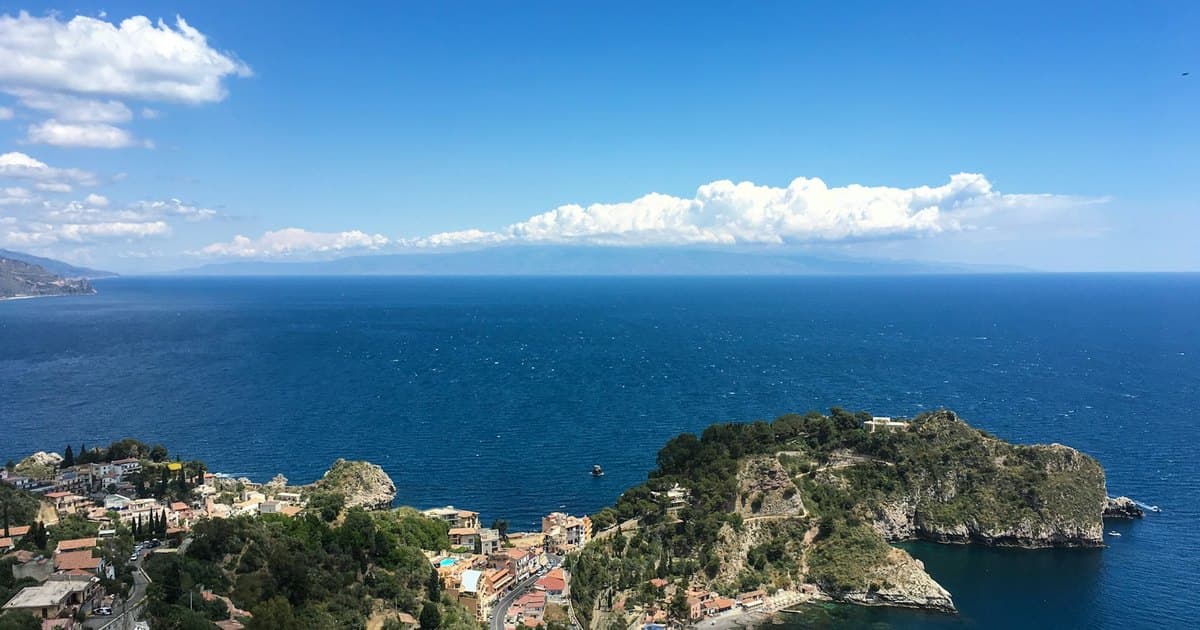
**Best combination:** Etna 4 days + Taormina 3 days (an hour east, the most beautiful Italian city by sea, with Belmond Grand Hotel Timeo as base). For UHNW principals visiting Italy for the first time, this combination beats Capri or Amalfi for sheer originality — and there are no tourists by your standards.

Réservation

Sicily Etna in 2026 is what Bolgheri was in 1985 — a region in the middle of its definitive ascent, where the prices have not yet caught up with the quality, and where the producers will still receive UHNW visitors personally. By 2030, the same visits will be 3x harder to arrange. The window is now. FFGR Italia coordinates the four days, the five estates, the helicopter, and the dinner at Don Camillo. WhatsApp +33 7 43 46 14 91 or contact@ffgritalia.com.

Réserver maintenant

— FFGR WORLDWIDE NETWORK —

Une maison française.
Douze capitales. Un seul standard.

Là où nos clients vont, le silence et l’élégance les précèdent.

Membre de la Fédération Française de la Grande Remise · Réseau mondial · Standards français d’excellence en mobilité de luxe

Réponse immédiate